
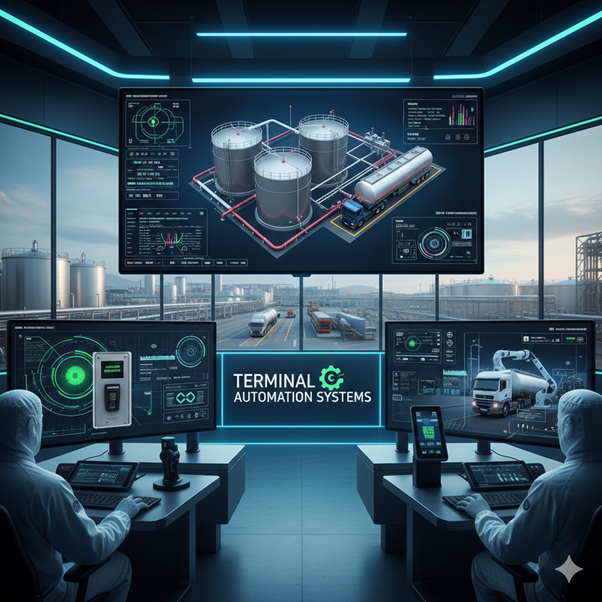
In today’s fast-moving world of bulk liquids, fuels, and chemicals, terminals form a critical junction between production, storage, and distribution. A terminal automation system acts as the intelligent backbone of these facilities—streamlining operations, minimizing risk, and enabling real-time control. In this blog, we’ll explore the benefits and working of a terminal automation system and highlight how Chemtrols, a trusted industrial equipment supplier, delivers advanced solutions for diverse industries through its expertise in process instrumentation.
________________________________________
What Is a Terminal Automation System?
At its core, a terminal automation system is an integrated control and monitoring platform used at bulk liquid terminals handling fuels, petrochemicals, and chemicals. It enables automated tracking and controlling of processes such as loading/unloading, blending, storage, metering, leak detection, and inventory management.
The system combines hardware—like flow meters, level sensors, control valves, and SCADA units—with software for control logic, user interface, and reporting. Together, these elements monitor, manage, and optimize terminal operations to ensure safety, accuracy, and efficiency.
As an experienced industrial equipment supplier, Chemtrols provides a comprehensive range of process instrumentation products, enabling the design and integration of fully automated terminal systems.
________________________________________
How a Terminal Automation System Works
A typical terminal automation system operates through several interconnected layers:
1. Field Instrumentation & Sensors
Data is gathered from flow meters, level transmitters, pressure sensors, and temperature probes. These instruments continuously track the conditions of storage tanks, pipelines, and pump stations.
2. I/O & Remote Units
Information from field devices is processed by PLCs or remote I/O modules, which handle interlocks, safety logic, and valve operations.
3. Communication & Networking
Secure communication networks transmit data between remote units and the central control system using industrial protocols for accuracy and speed.
4. Central Control / SCADA Layer
The SCADA or DCS platform serves as the system’s brain, providing a real-time graphical view of operations—tank levels, flow rates, alarms, and process trends. It also logs data for analysis and audit trails.
5. Accounting & Inventory Management
The automation system integrates with ERP or accounting systems to calculate volumes, reconcile losses, and generate reports for custody transfer and billing accuracy.
6. Alarms, Safety & Redundancy
Automated alarms and safety interlocks prevent overfills, leaks, and system failures. Redundant configurations ensure uninterrupted operations.
By integrating these components, a terminal automation system ensures operational excellence, safety, and transparency across all processes.
________________________________________
Benefits of Implementing a Terminal Automation System
1. Enhanced Safety and Risk Control
Automated interlocks and continuous monitoring minimize human error and prevent hazardous incidents such as spills or overfills.
2. Increased Efficiency and Throughput
Automation reduces manual intervention, speeds up loading and unloading, and optimizes resource utilization for higher productivity.
3. Accurate Metering and Inventory Management
Precision instruments ensure accurate measurement and reconciliation, supporting regulatory compliance and minimizing product loss.
4. Real-Time Visibility and Control
Operators can view live data, monitor performance, and analyze trends instantly—empowering smarter decisions and predictive maintenance.
5. Cost Optimization
Reduced downtime, labor savings, and fewer operational errors lead to better profitability and a faster return on investment.
6. Scalability and Integration
A modular system design allows terminals to expand easily and integrate seamlessly with enterprise systems like ERP or logistics platforms.
________________________________________
Why Choose Chemtrols for Terminal Automation
Chemtrols is a leading industrial equipment supplier with decades of experience in process instrumentation and automation. The company provides end-to-end solutions for terminal automation, including design, supply, commissioning, and after-sales support.
Key reasons to choose Chemtrols include:
• Comprehensive Solutions – From flow meters and sensors to SCADA and control systems, Chemtrols offers all components under one roof.
• Industry Expertise – Proven experience across oil & gas, petrochemical, chemical, and power sectors ensures reliable project execution.
• Custom Engineering – Tailor-made systems that match your plant’s architecture and operational requirements.
• Quality and Compliance – Solutions that meet global standards for accuracy, safety, and reliability.
With Chemtrols, you get more than just automation—you gain a trusted partner focused on long-term operational excellence.
________________________________________
Best Practices for Effective Implementation
• Design for Redundancy: Ensure backup power and communication paths for continuous uptime.
• Maintain Calibration: Regular calibration of flow and level instruments ensures long-term accuracy.
• Focus on Cybersecurity: Protect control networks from unauthorized access through secure protocols.
• Plan for Scalability: Future-proof the design for capacity expansion and system upgrades.
• Train Operators: Skilled staff are key to leveraging the full potential of terminal automation.
________________________________________
Conclusion
A terminal automation system transforms manual, time-consuming operations into safe, efficient, and transparent processes. With smart integration of process instrumentation, control logic, and data management, terminals can achieve higher accuracy, safety, and profitability.
Partnering with Chemtrols, a trusted industrial equipment supplier, ensures you receive expert guidance, reliable products, and cutting-edge automation technology tailored to your terminal’s unique needs.