
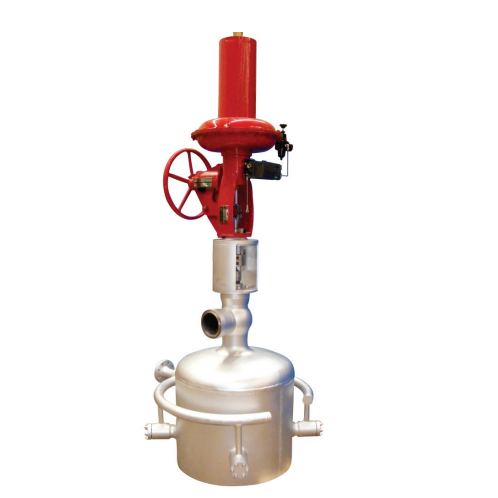
In the intricate world of industrial processes, steam remains a vital, versatile, and high-energy medium. From power generation and petrochemical complexes to fertilizer and steel manufacturing, the efficiency and safety of operations hinge on precise steam conditioning. Boiler-generated steam is often superheated—meaning its temperature exceeds the saturation temperature for its pressure. While essential for turbine efficiency and long-distance transport, this superheated state is often too hot or too high-pressure for auxiliary plant equipment or end-user processes. This is where specialized control systems become critical, chief among them being the Desuperheater and the Pressure Reducing and Desuperheating System, or PRDS.
Understanding the Necessity of Steam Conditioning
The fundamental purpose of steam conditioning is to adjust the steam’s temperature and pressure to match the specific requirements of the process or equipment it serves. Using superheated steam in an application designed for saturated steam can lead to component overheating, material stress, and eventual failure of heat exchangers and valves. Similarly, operating at unnecessarily high pressures wastes energy, compromises safety, and increases wear and tear on downstream equipment.
A dedicated Desuperheater is often used in isolation when only the temperature needs adjustment, typically by introducing a controlled spray of fine water droplets into the steam flow to bring the temperature down to the saturation point or a predetermined set point. However, in most industrial scenarios, both pressure and temperature must be reduced simultaneously, leading to the deployment of the sophisticated PRDS unit.
The Mechanism of the PRDS
The PRDS is an integrated system designed to perform two crucial functions: reduce the pressure of the steam and subsequently lower its temperature (desuperheating). This combination allows manufacturers to draw high-pressure steam from a central header and condition it to meet lower-pressure, lower-temperature process demands without the need for multiple, complex control loops.
A typical PRDS consists of:
1. Pressure Reducing Valve (PRV): This valve uses a pneumatic or electric actuator, controlled by a feedback loop, to throttle the steam flow, thereby reducing its pressure to the required set point.
2. Desuperheater Section: Integrated immediately downstream of the PRV, this section injects high-purity water. The pressure drop aids in the rapid atomization and evaporation of the water, which absorbs the excess heat from the superheated steam, achieving the desired temperature.
3. Control System: A highly responsive system of sensors, transmitters, and controllers that continuously monitor outlet pressure and temperature, modulating the PRV position and the water injection flow to maintain stability. The reliability of the PRDS hinges on this precise control.
A well-engineered PRDS ensures that the steam delivered to the process is safe, consistent, and optimally conditioned.
Applications Across Varied Industries
As a leading solutions provider, Chemtrols has for over four decades deployed advanced steam engineering solutions, including high-performance PRDS units, across a vast spectrum of sectors. Our experience as an expert industrial equipment supplier demonstrates that the need for a reliable PRDS is universal wherever high-pressure boilers feed lower-pressure processes.
• Power Generation: Turbine bypass systems often utilize large-capacity PRDS (sometimes DUMP PRDS) to route steam directly to the condenser during start-up or shutdown, maintaining boiler stability and protecting the turbine.
• Petrochemicals and Refineries: These facilities require stable low-pressure steam for reboilers, stripping columns, and tracing lines. A dependable PRDS protects delicate heat exchange equipment from thermal shock.
• Fertilizer and Chemical Plants: Precise temperature control is paramount for chemical reactions. The PRDS delivers steam at the exact conditions required, ensuring process consistency and product quality.
• Pulp and Paper: Process heating in digesters and dryers relies on consistent steam quality, which is meticulously controlled by the installed PRDS.
The diverse requirements of these industries underscore why the selection of a robust and customizable PRDS solution is critical for engineering growth.
Key Advantages of Implementing a Reliable PRDS:
The investment in a high-quality PRDS system yields significant operational and economic benefits, cementing its role as essential industrial equipment.
1. Energy Efficiency and Savings: By reducing steam pressure and temperature precisely, a PRDS minimizes energy wastage. It allows the main boiler to operate at its most efficient pressure while downstream users receive steam only at the necessary minimum conditions. The control of temperature prevents overheating, which can compromise the efficiency of the entire system.
2. Protection of Equipment: Conditioning the steam prevents erosion, thermal stress, and water hammer in downstream piping, valves, and exchangers, dramatically extending the lifespan of expensive assets. This protective function is a primary justification for installing a PRDS.
3. Process Stability and Control: The highly responsive nature of a modern PRDS ensures the steam quality (pressure and temperature) remains absolutely constant despite fluctuations in boiler output or downstream demand. This stability is key for product quality in sensitive manufacturing processes.
4. Operational Flexibility: A well-designed PRDS offers the operational flexibility needed to handle a wide turndown ratio—the ability to function efficiently across a large range of flow rates. This is especially important for facilities with seasonal or variable demands.
5. Safety Enhancement: By controlling pressures and temperatures within design limits, the PRDS fundamentally reduces the risk of equipment failure and pressure-related incidents, enhancing overall plant safety. The dependable operation of the PRDS system is non-negotiable for safety compliance.
Chemtrols: Your Partner in Steam System Optimization
As a trusted industrial equipment supplier and manufacturer since 1975, Chemtrols Industries Pvt. Ltd. provides proven B2B solutions in Steam Engineering. Our expertise focuses on delivering not just equipment, but tailored engineering solutions. We understand that every industrial application of the PRDS presents a unique challenge, from managing high flow rates to handling aggressive steam chemistries.
Our Desuperheater and PRDS solutions are designed with a focus on high accuracy, fast response, and robust construction to ensure maximum uptime. We leverage decades of experience and adherence to stringent quality policies to offer systems that meet the demanding requirements of core sectors like Power and Oil & Gas. Choosing Chemtrols means partnering with an organization whose guiding principles are built on quality, technical leadership, and delivering long-term value through reliable PRDS technology.
Conclusion:
The PRDS is far more than a simple component; it is the heart of steam management within an industrial plant, offering unparalleled control over both pressure and temperature. From safeguarding expensive downstream equipment to dramatically increasing energy efficiency, the advantages of a professionally designed and installed PRDS are clear. By collaborating with an established partner like Chemtrols, you ensure your steam system operates at peak performance, safely and reliably, today and for decades to come. The right PRDS is the cornerstone of a successful industrial operation.