
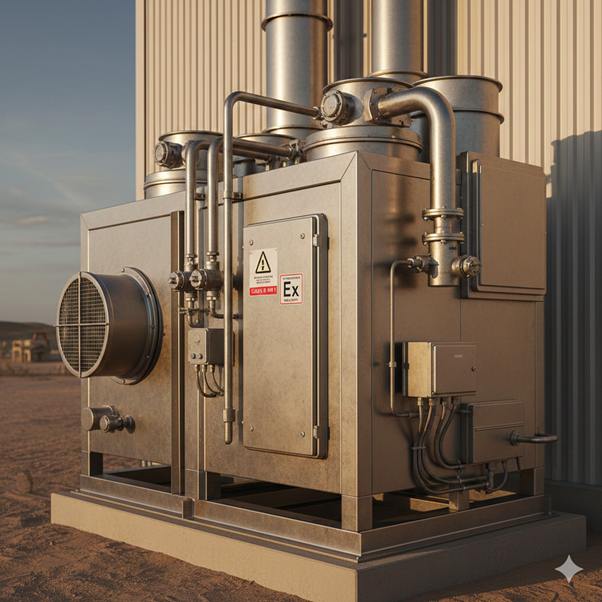
When it comes to maintaining safe and reliable climate control in industrial settings, a standard HVAC (heating, ventilation, and air conditioning) system often isn’t enough. In environments where explosive gases, dust, or volatile vapors are present, an Ex Proof HVAC system (also called explosion-proof HVAC) becomes essential.
In this blog post, we’ll explain how Ex Proof HVAC systems work, where they apply, and how a trusted industrial equipment supplier like Chemtrols can support you with integrated solutions in process instrumentation and control.
________________________________________
What Is an Ex Proof HVAC System?
An Ex Proof HVAC system is specifically engineered for hazardous or classified zones—areas where flammable gases, vapors, or dust may exist. Unlike conventional HVAC systems, these are built with components designed to contain internal ignition events so that they don’t spark or cause an explosion in the ambient environment.
These systems comply with rigorous safety standards (such as ATEX, IECEx, and NEC classifications) to serve industries like oil & gas, petrochemicals, chemical plants, refineries, and analyzer shelters.
Key Features:
• Hermetically sealed compressors and motors
• Spark-resistant or non-arcing fans
• Robust enclosures rated for hazardous areas
• Redundant or dual circuits for continuous uptime
• Purge or pressurization options to prevent entry of explosive gases
• Corrosion-resistant coatings for harsh atmospheres
________________________________________
How an Ex Proof HVAC System Functions
Here’s a simplified breakdown of how an Ex Proof HVAC system operates in hazardous environments:
1. Purge / Pre-Condition Stage:
Before switching on the main cooling or heating, the system may purge the space with clean air to reduce explosive gas concentration below safe thresholds.
2. Temperature Control & Airflow:
Once the area is safe, the HVAC system regulates temperature and humidity like a standard unit. However, its components are explosion-hardened and fully sealed to prevent any spark or ignition.
3. Pressurization (Positive Pressure):
Many Ex Proof HVAC systems maintain positive pressure inside shelters or control rooms to keep hazardous gases or vapors from entering.
4. Safety & Monitoring:
Specialized sensors continuously monitor gas or vapor levels. If unsafe thresholds are detected, the system can shut down automatically or switch to a safe purge mode.
5. Redundancy & Reliability:
Critical installations use redundant compressors and dual circuits to ensure continuous operation, even if one component fails.
________________________________________
Where Ex Proof HVAC Systems Are Used
Typical applications include:
• Analyzer shelters, control rooms, and instrument enclosures in oil, gas, and chemical plants
• Refineries and offshore platforms handling flammable substances
• Battery storage and hydrogen facilities with explosion risks
• Dust-laden manufacturing plants such as flour or sugar mills
In each of these cases, the HVAC system must not become a potential ignition source, making Ex Proof design a safety necessity.
________________________________________
Why Use Ex Proof HVAC Over Standard HVAC?
• Enhanced Safety: Prevents ignition and contains internal sparks.
• Compliance with Regulations: Meets global hazardous-area standards.
• Protection for Sensitive Equipment: Maintains stable temperature for process instrumentation.
• Durability: Designed to perform in corrosive or harsh conditions.
• Operational Continuity: Redundant design minimizes downtime.
________________________________________
How Chemtrols Supports Your Ex Proof HVAC Needs
As a reputed industrial equipment supplier, Chemtrols brings decades of expertise in process instrumentation and automation.
Here’s how Chemtrols can help:
• System Integration: Chemtrols can integrate Ex Proof HVAC systems with your existing control and safety infrastructure.
• Instrumentation & Control: Offers compatible sensors, transmitters, and automation modules for seamless monitoring and control.
• Customized Engineering: With advanced manufacturing facilities in Goa, Rabale, and Ambernath, Chemtrols delivers tailored HVAC solutions for specific hazardous zones.
• End-to-End Support: From installation to maintenance, Chemtrols provides complete lifecycle support to ensure consistent system performance.
Partnering with Chemtrols means working with a team that understands your process environment, safety needs, and industrial compliance requirements.
________________________________________
Design Tips & Best Practices
• Identify and classify your hazardous zones before selecting a system.
• Choose the right cer industrial equipment supply and process intification (e.g., ATEX Zone 1 or Zone 2) for your site.
• Design for redundancy to ensure reliability in critical operations.
• Keep outdoor units away from potential gas or vapor sources.
• Integrate HVAC monitoring into your process control systems.
• Schedule regular inspections and purge testing for safe operation.
________________________________________
Conclusion
For industries working in hazardous or explosive environments, an Ex Proof HVAC system is not just an upgrade—it’s an essential safety investment. These systems ensure safe, reliable climate control, protect vital process instruments, and maintain compliance with international standards.
If your facility needs a robust, compliant, and efficient HVAC solution, trust Chemtrols—India’s leading name in industrial equipment supply and process instrumentation—to engineer and deliver systems that perform safely and efficiently in the most demanding conditions.